
Black Wildebeest
Appearance of the Black Wildebeest
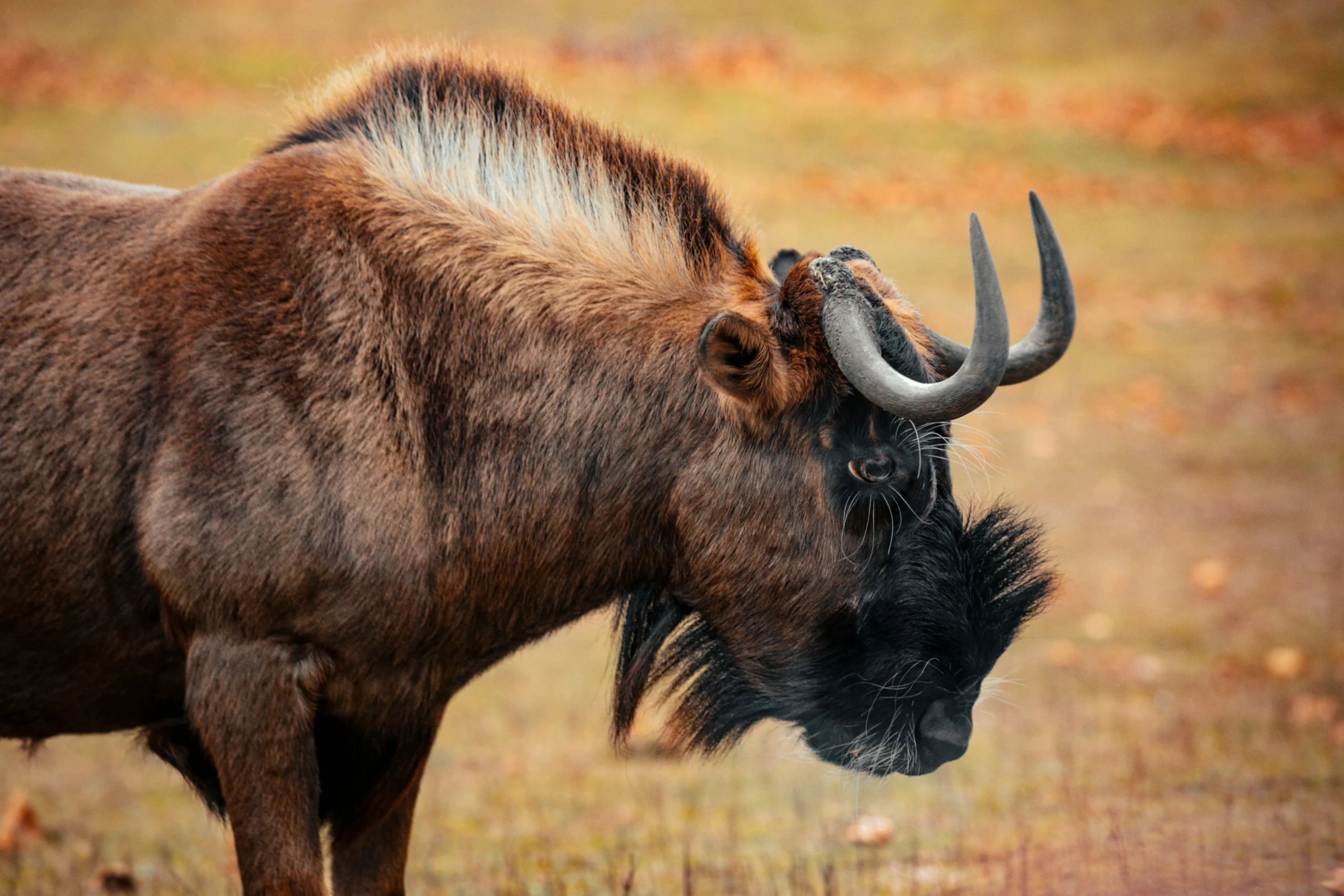
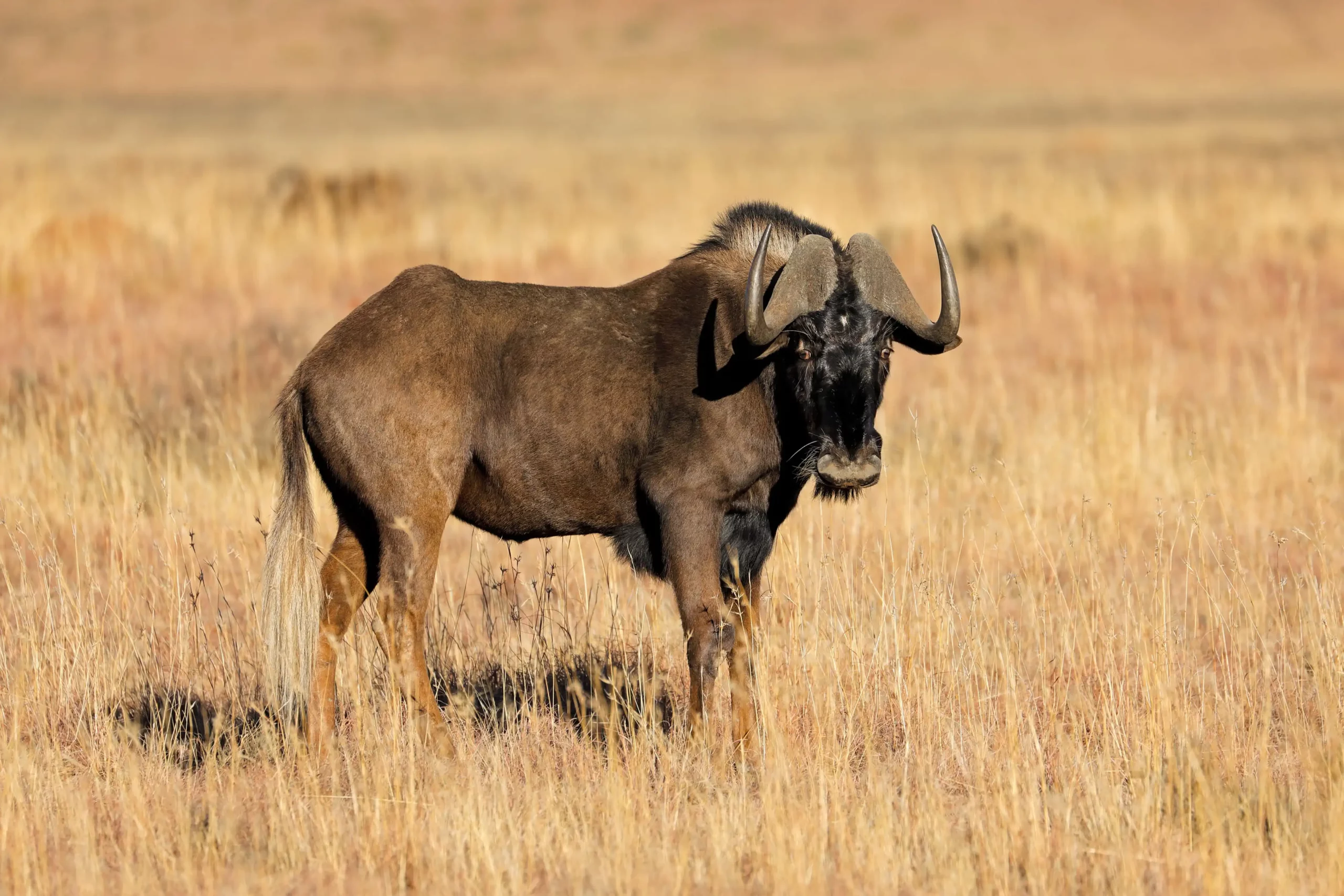
The Black Wildebeest has a compact frame, dark brown coat, and forward-curving horns that clearly set it apart from Blue and Golden Wildebeest. Blue and Golden animals are larger, broader, and carry horns that sweep outward before turning upward. The Black Wildebeest is lighter in build and shows a cream-coloured tail that stands out in the field.
You spot the Black Wildebeest most easily on open grassland. The dark body, heavy shoulders, and short, strong neck give it a clear outline at distance. The horns curve forward first, which is a reliable marker when checking a herd through binoculars. At NTONI, we usually hunt Black Wildebeest with a .30-06 Springfield or a .300 Winchester Magnum, as these calibres perform well on the longer, steady shots often required in open terrain.
Behaviour
Behaviour of the Black Wildebeest
The Black Wildebeest stays in small herds and keeps to open ground where the animals maintain clear visibility. They move in short, quick steps and change direction often, which means the professional hunter watches their rhythm closely before guiding the stalk. Unlike Blue and Golden Wildebeest, the Black Wildebeest remains within a smaller home range and does not undertake wide seasonal movements.
During a hunt, we approach from the side or from slightly elevated ground. This keeps noise and movement low while allowing the PH to monitor wind direction and the herd’s position. Because the animals shift frequently, the moment for a shot can be brief.
Life & Ecology
Life & Ecology of the Black Wildebeest
The Black Wildebeest relies on open grasslands with short vegetation, where it grazes throughout the day and can detect predators quickly. Herds consist of females with calves and a few territorial bulls. They live around twenty years in a stable environment and show strong loyalty to familiar ground.
At NTONI, Black Wildebeest play an important role in maintaining balanced grazing. Their presence helps keep grass levels steady across the open plains. Before a hunt takes place, the PH assesses age, condition, and herd impact to select the right animal. This supports healthy herd structure and preserves the ecological balance of the reserve.


