
The Wildebeest’s Build
The Wildebeest’s Build and Key Differences Between the Species
Wildebeest are even-toed, horned ungulates with a greyish-brown coat and a build that resembles cattle. They have broad muzzles, Roman noses, and shaggy manes and tails. Males are larger than females and show heavy forequarters compared to the hindquarters.
The most striking differences between the black and blue wildebeest lie in their horn shape and coat colour. Blue wildebeest are the larger species. Male blue wildebeest stand 150 cm (59 in) at the shoulder and weigh around 250 kg (550 lb), while male black wildebeest stand 111–120 cm (44–47 in) and weigh about 180 kg (400 lb). Female blue wildebeest reach 135 cm (53 in) and 180 kg (400 lb), whereas female black wildebeest stand 108 cm (43 in) and weigh 155 kg (342 lb).
Horn structure also separates the two species: blue wildebeest horns protrude outward, then curve downward before turning upward again. Black wildebeest horns curve forward, then downward, before curling up at the tips. Coat colour varies as well. Blue wildebeest have a dark grey coat with stripes and sometimes a bluish sheen, while black wildebeest have brown hair, a cream-to-black mane, and a cream-coloured tail.
Life Across Open Plains
How Wildebeest's Use Their Landscapes
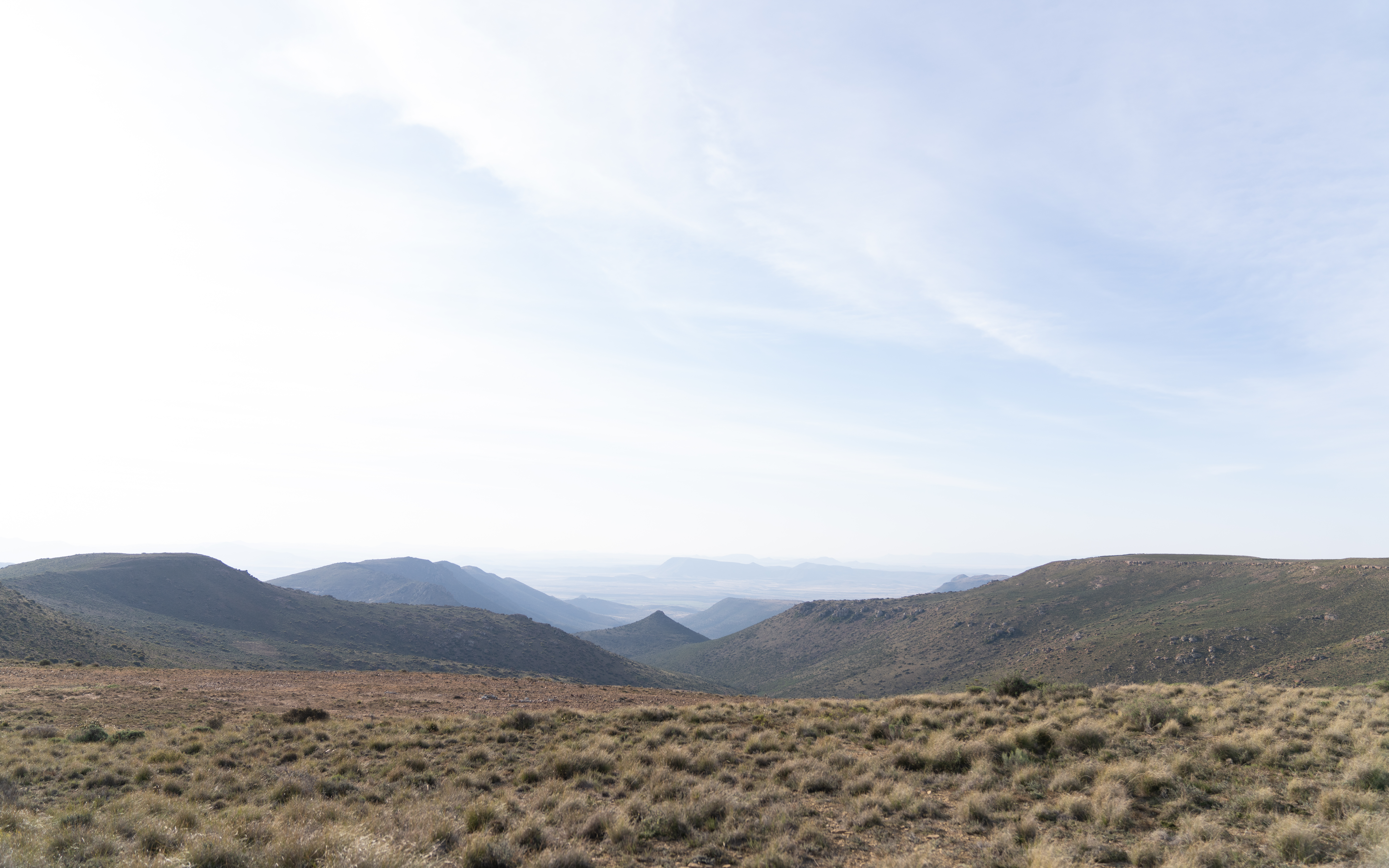
Blue wildebeest live in a wide range of habitats, including woodlands and open grasslands. In some regions, blue wildebeest migrate over long distances during winter. Another difference between the species is found in milk composition: the milk of the black wildebeest contains higher protein, lower fat, and lower lactose levels than the milk of the blue wildebeest.
Both species can live more than 40 years, although the average lifespan is around 20 years.
Hunting
Hunting Considerations for Wildebeest on Varied Terrain
Golden wildebeest fall within the same species group and share similar body structure and horn orientation to blue wildebeest, with colour being the distinguishing factor. For all wildebeest on open ground, hunters rely on calibres that perform well on muscular, heavy-bodied antelopes. At Ntoni, the consistent recommendations for similar-sized species include the .30-06 Springfield and .300 Winchester Magnum, with other suitable options depending on hunter preference. Their strong forequarters, alert nature, and herd behaviour require steady shot placement and clear positioning.


