
Appearance
Cape Buffalo Appearance
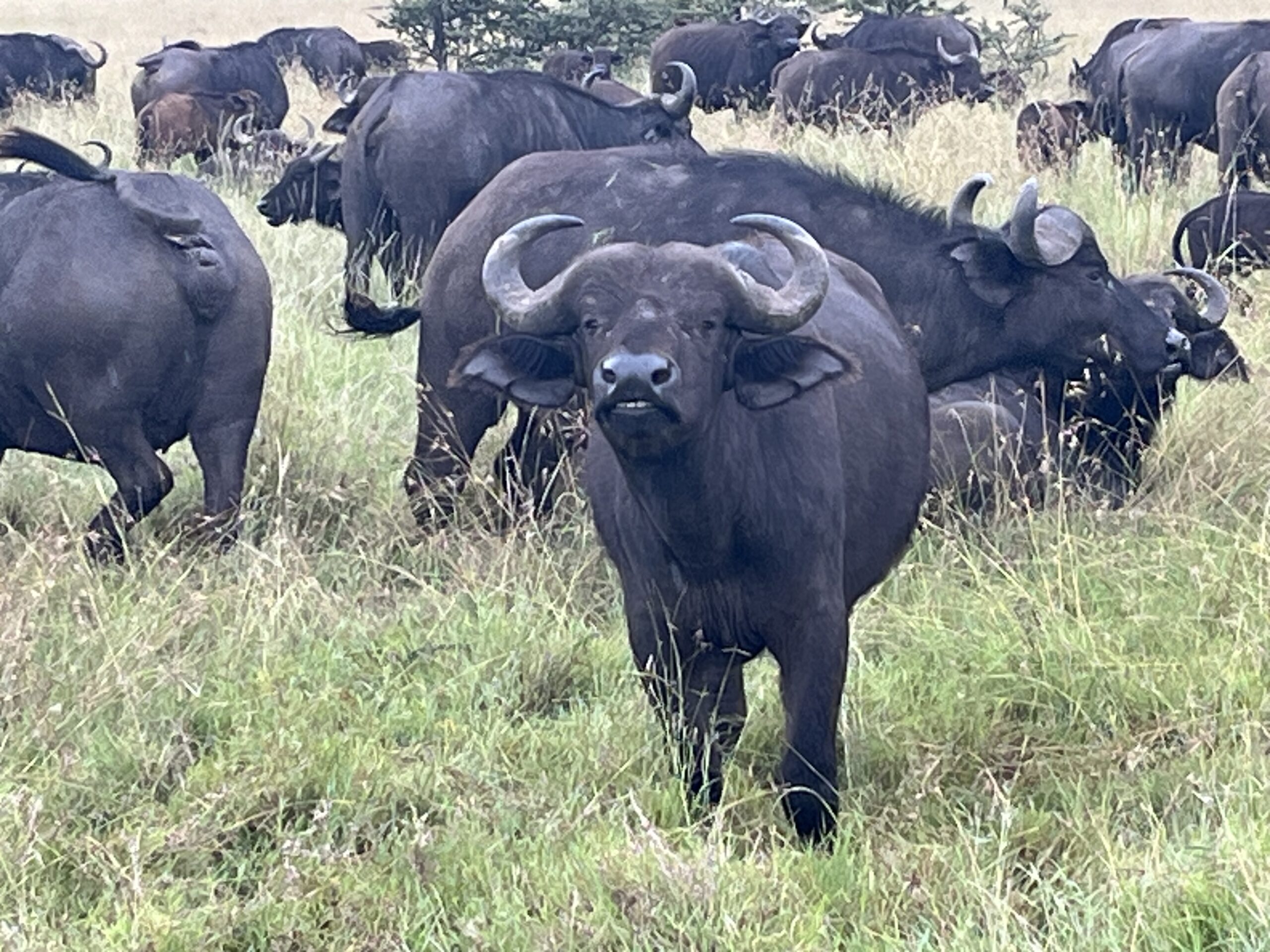
The African buffalo is one of Africa’s most imposing bovines, standing 1.0–1.7 m (3.3–5.6 ft) at the shoulder and reaching a body length of up to 3.4 m (11.2 ft). Adults weigh between 425 and 870 kg (937–1,918 lb), with males roughly 100 kg heavier than females. Their build is compact, muscular, and front-heavy, supported by wide hooves that carry most of the weight in the chest and shoulders.
A defining feature of mature males is the fused horn base, the “boss”, forming a heavy bone shield across the forehead. From there, the horns sweep downward and outward, sometimes spanning more than 160 cm (64.5 in). Females have slimmer horns without a fully developed boss. Coat colours vary by subspecies: savannah buffalo are dark brown to black, forest buffalo are smaller and reddish, and calves begin life with a red coat.
Behaviour
Social Behaviour & Defensive Instincts
Cape Buffalo are highly adaptive grazers, thriving in savannas, wetlands, mopane grasslands, and open woodland as long as daily access to water is available. Their feeding strategy, using a wide incisor row and powerful tongue, allows them to clear coarse grasses that other herbivores avoid, shaping vegetation patterns for other species.
Their social system is complex and cooperative. Core herds consist of related females and calves, surrounded by subherds of males of various ages. Herds collectively decide travel direction through a “voting” behaviour in which resting females face the direction they intend to move. When confronted by predators, buffalo pack tightly together, placing calves in the middle. They are famous for mobbing behaviour, rushing to rescue a distressed herd member and aggressively confronting threats, including lions. Watch a video here.
Vocal communication includes low bellows, grunts, calls signalling direction changes, croaks from mothers searching for calves, and high distress calls. Males maintain a linear dominance hierarchy and engage in horn clashes, sparring, and body displays. Older solitary bulls “dagga boys” are considered the most unpredictable.
Vocal communication includes low bellows, grunts, calls signalling direction changes, croaks from mothers searching for calves, and high distress calls. Males maintain a linear dominance hierarchy and engage in horn clashes, sparring, and body displays. Older solitary bulls “dagga boys” are considered the most unpredictable.
Life & Ecology
Ecology, Reproduction & Survival
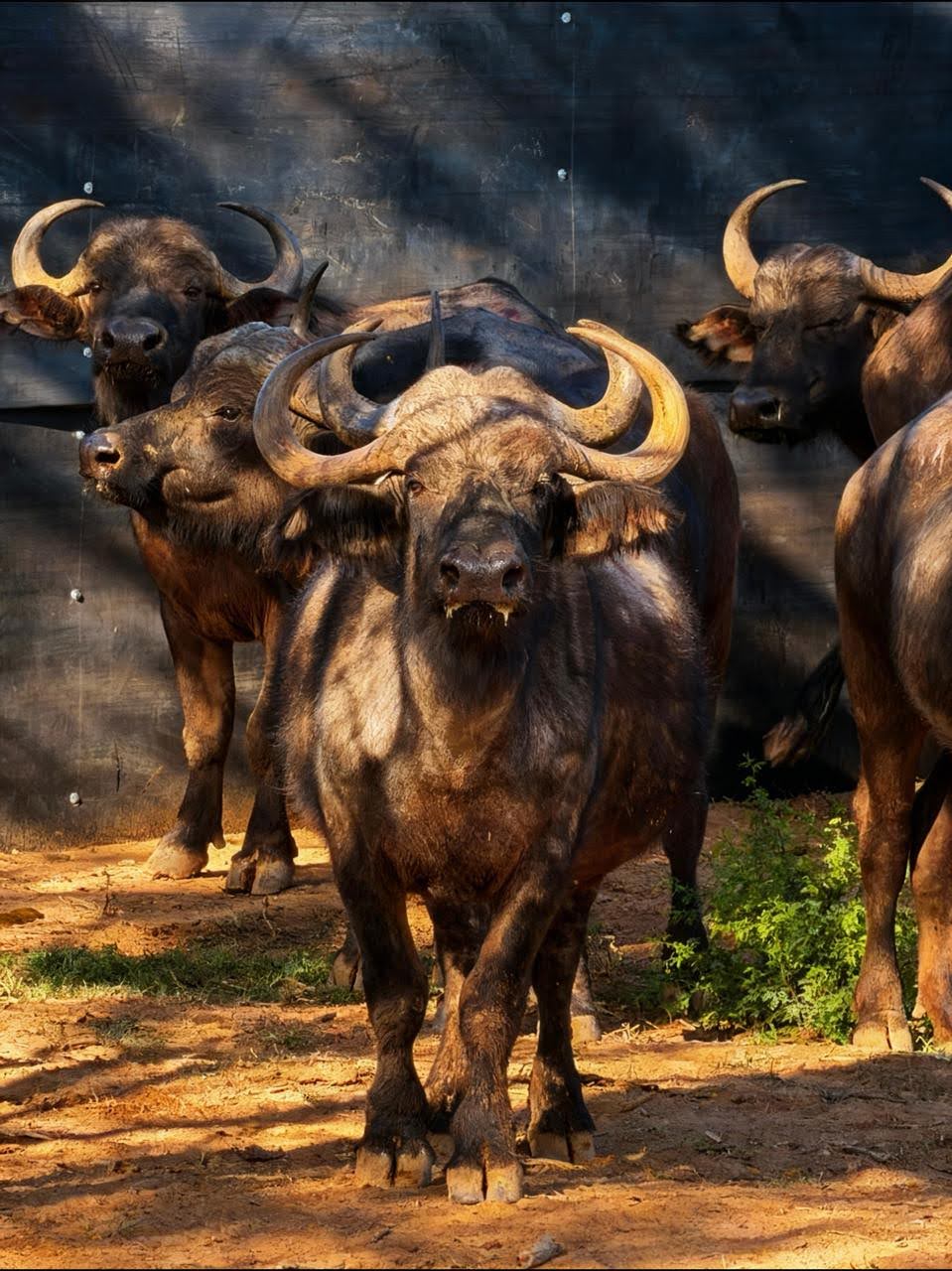
Cape Buffalo depend on perennial water and move through landscapes in response to forage quality and seasonal rainfall. By consuming tall, coarse grasses, they open feeding opportunities for more selective grazers and influence patterns of plant succession across savanna ecosystems. Their main predators include lions, spotted hyenas, African wild dogs, leopards, and Nile crocodiles, though healthy adults can be deadly opponents and have been documented killing lions during defensive clashes.
Females reach sexual maturity around five years and males at four to six. Calving peaks early in the rainy season after an 11.5-month gestation. A single calf is born and remains hidden for several weeks. The maternal bond lasts longer than in most bovids, and older calves remain with their mothers until displaced by the next newborn. Males leave their maternal groups at around two years to join bachelor herds. Wild buffalo commonly live 11–20 years depending on conditions.
The Cape Buffalo is currently listed as Near Threatened, with a population of approximately 400,000. Conservation is challenged by disease transmission from domestic cattle and shrinking habitat, but stable, well-managed populations persist across southern and eastern Africa. Economic value through tourism and regulated hunting encourages ongoing protection.


